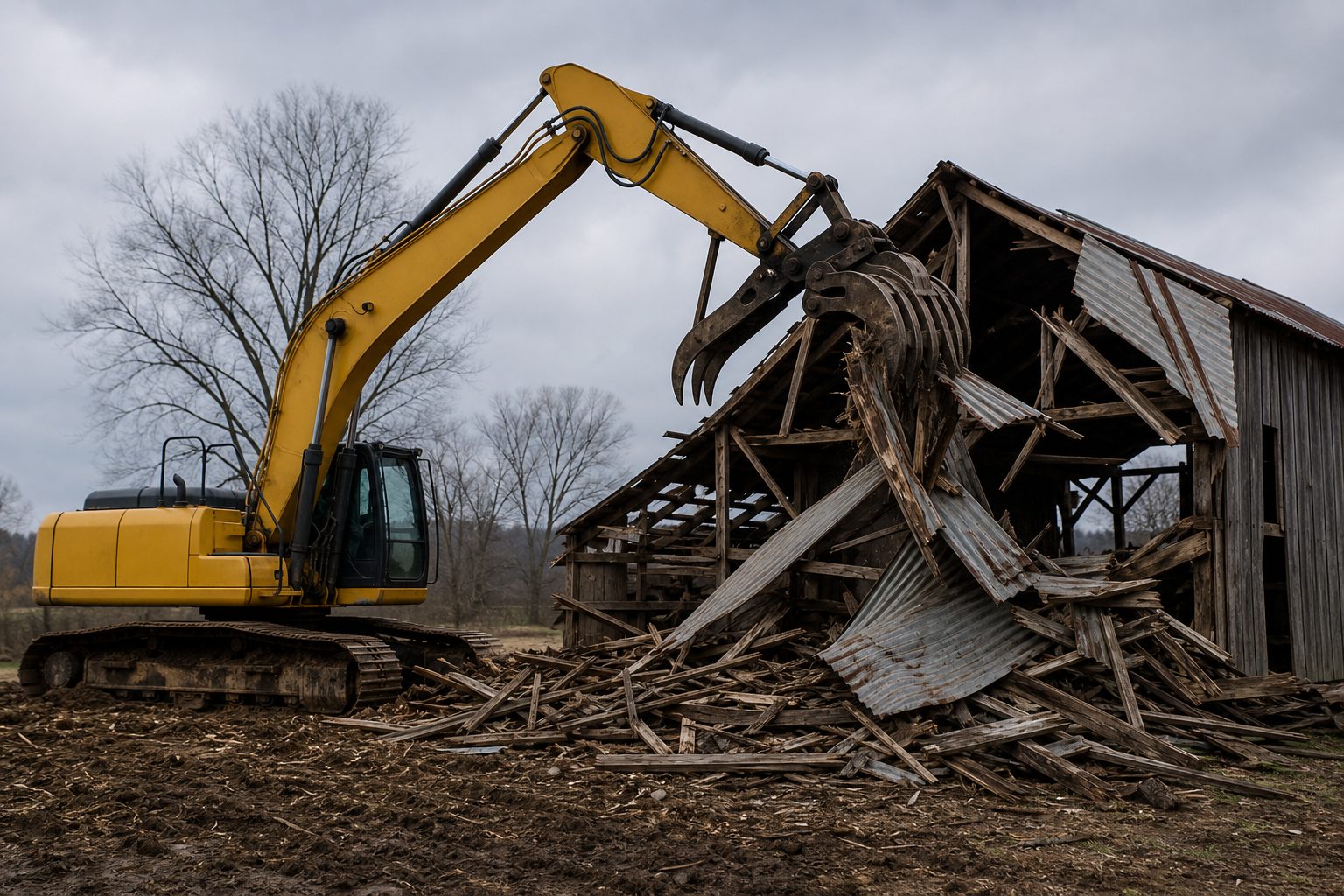
Old barns, collapsing sheds, mobile homes and small houses are everywhere on East Tennessee property, and most of them outlive their usefulness long before anyone gets around to removing them. If you have one sitting on land you want to build on, sell, or simply reclaim, here is what the demolition process actually involves.
Start With What Is Inside and Underneath
Demolition rarely begins with a machine. It begins with figuring out what the structure contains and what it is connected to.
- Utilities. Power, water, gas and any septic connection have to be located and properly disconnected before anything is touched. This is the single most important safety step and the one most likely to be skipped by someone working cheap.
- Contents. Anything you want out of the building comes out first. Once demolition starts, everything becomes debris.
- Hazardous materials. Older structures may contain materials that require special handling. Age of the building is the first clue, and it needs to be assessed before demolition rather than discovered mid-job.
- Wells and septic tanks. Abandoned wells and old septic tanks on the site need to be dealt with properly, not just covered over.
Mobile Homes Are Their Own Category
Removing a mobile home is different from demolishing a stick-built structure. There is a steel chassis, axles, and often a substantial amount of metal that separates out from the rest of the debris. There are usually piers, tie-downs and skirting to remove, sometimes a poured pad, and frequently a septic connection and a power pole that need attention.
There is also the question of whether the home is worth moving rather than demolishing. Most older units on rural East Tennessee lots are not, but it is worth asking before you commit, particularly if it is relatively recent and structurally sound.
Barns and Outbuildings
Old barns present a different set of considerations. Many are timber-framed with material that has real value, and reclaimed barn wood and vintage tin are worth separating rather than crushing if you have any interest in salvage. It slows the job down, so decide before we start.
Structurally, older barns are unpredictable. Decades of settling, rot at the sill, and previous repairs mean they do not always come down the way you expect. That is a safety issue, and it is the reason a barn is not a do-it-yourself weekend project with a chain and a pickup truck.
The Actual Demolition
Once the site is prepared, the work itself is fairly quick. An excavator with the right attachment takes the structure down in a controlled sequence, working so that material falls where it can be handled. Debris gets sorted as it comes down, since metal, wood, concrete and general waste have different disposal paths and different costs.
Then it is hauled off. Disposal is one of the larger line items in any demolition quote, because you are paying for trucking and for tipping fees by weight or volume. This is where quotes diverge the most: hauling and dumping the debris is a much bigger expense than knocking the building down.
Do Not Forget the Foundation
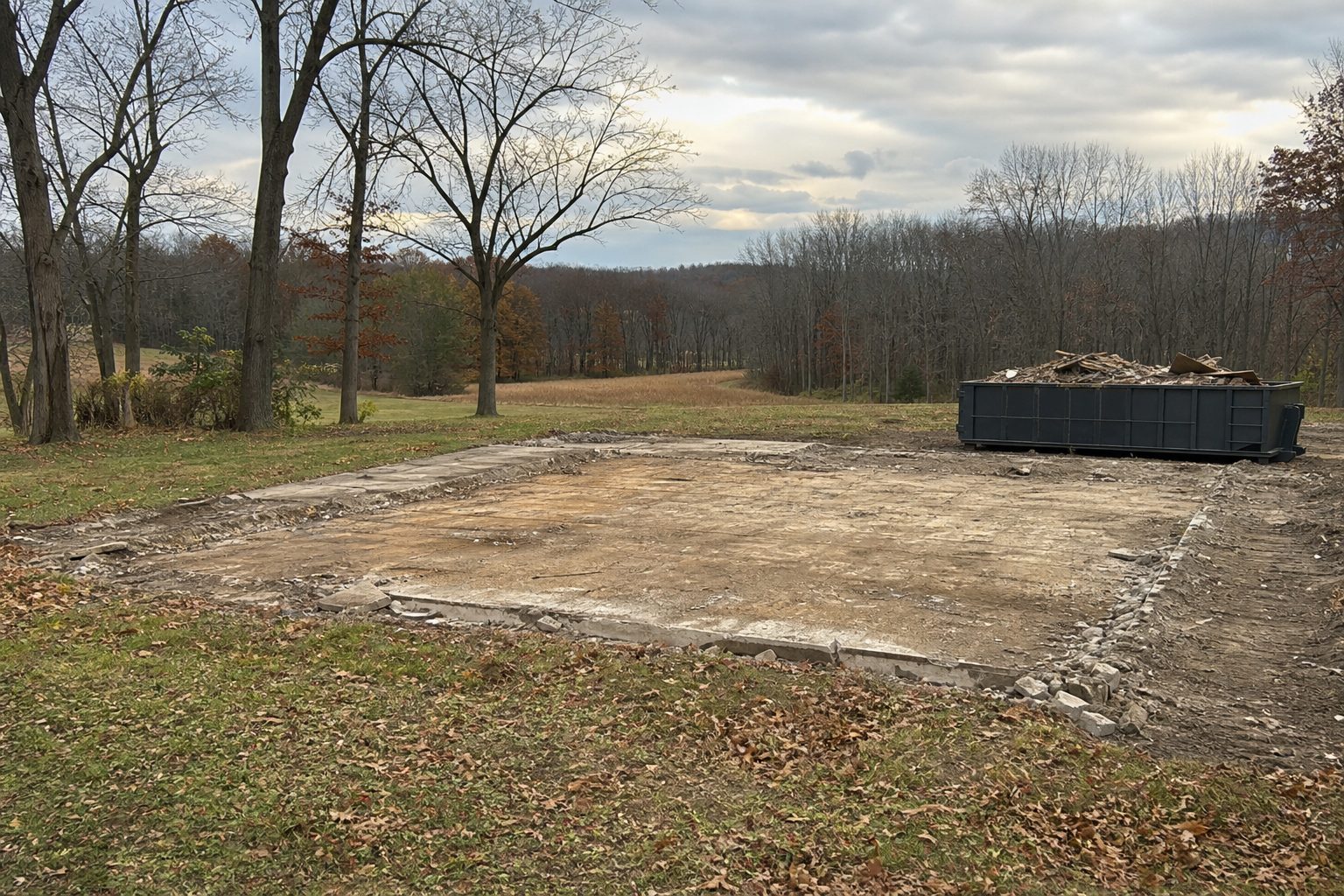
Decide before the quote whether the slab, footings, piers or block foundation are coming out. Leaving a slab in the ground is cheaper today and a problem later if you intend to build on that footprint or install a septic field nearby. Breaking out and removing concrete is real work and should be priced explicitly, not assumed.
What You Should End Up With
A properly finished demolition leaves you with a clean site: debris removed, holes and voids filled with suitable material and compacted, the area graded to drain, and the ground ready for whatever comes next. If the plan is to build there, that grading matters. If the plan is to put it back in grass, it should be shaped and seeded.
Ask any contractor you are considering what the site will look like when they leave. "Structure removed" and "site restored" are two different scopes and two different prices.
What Drives the Cost
The main factors are:
- Size and construction type of the structure
- Debris volume and weight, which drives hauling and disposal
- Access, meaning whether machines and loaded trucks can reach the building easily
- Foundation removal, if included
- Hazardous material handling, if any is present
- Site restoration, from simple backfill to full grading and seeding
Our excavation projects start at $3,000, and demolition work is quoted after we have seen the structure. We do not price a demolition off a photo, because what is inside the walls and under the floor is what determines the number.
Clearing the Way for What Is Next
Most of the demolitions we do are not really about tearing something down. They are the first step in building something: a new home where a mobile home sat for thirty years, a shop where a barn is falling in, a clean lot for a sale. Because we also handle land clearing, grading, house pads, utilities and septic, we can take a property from "there's an old structure in the way" to "build-ready" without you managing three separate contractors.
Get a free quote from Clear Flow Services and we will come look at the structure and give you a firm number. We serve Loudon, Roane, Knox, Anderson, Morgan, Monroe, Blount, McMinn, Meigs and Sevier counties.