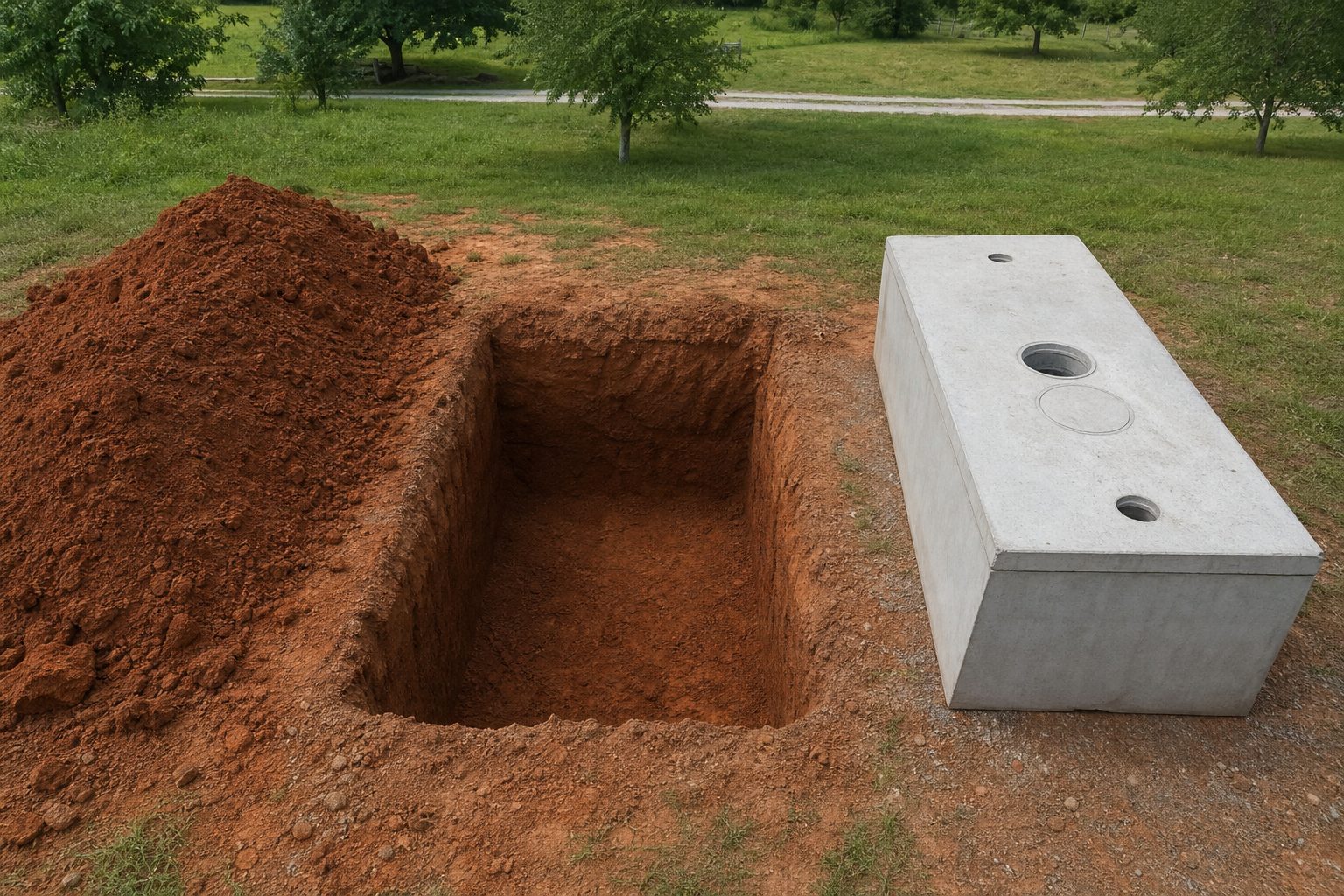
"What does a septic system cost?" is the first question almost every homeowner asks us, and it is the one most contractors dodge. We would rather explain how the number is built, so you can tell the difference between a fair quote and a bad one.
Our septic projects start at $7,000, and general excavation projects start at $3,000. Where a specific job lands above that depends on a handful of factors, and every one of them is knowable before work begins.
1. System Type
This is the biggest single driver. A conventional gravity system, where a tank feeds a trench drain field with no pumps involved, is the least expensive option. Anything else costs more:
- Low Pressure Pipe (LPP) adds a pump tank, a pump and controls.
- Mound systems add imported sand fill and a much larger constructed area.
- Drip and other advanced systems add treatment components, filtration and dosing controls.
You do not choose the system type. The soil does. If your lot supports a conventional system, that is what should be designed, because it is cheaper to build and cheaper to own.
2. House Size
Septic systems are sized by bedroom count, not square footage. Under Tennessee's rules for alternative systems, design flow is calculated at 150 gallons per bedroom per day, and systems above 750 gallons per day are treated as large systems with additional design requirements. In practical terms, the difference between a three-bedroom and a five-bedroom house is a materially larger, more expensive system.
This is worth knowing at the house-plan stage. Adding a bedroom on paper can add real cost underground.
3. Site Conditions
Two identical houses on two different lots can have very different septic costs. What drives it:
- Depth to rock. Shallow rock can eliminate conventional systems entirely and force a more expensive design.
- Slope. Steep ground affects layout, may require more distribution equipment, and makes the excavation slower.
- Soil texture. Tight clay absorbs slowly, which means a larger absorption area.
- Access. If a truck cannot get near the work, everything takes longer.
- Distance from the house to the field. Longer runs mean more pipe and more trenching.
4. Permits and Inspection Fees
These are set by the state, not by your contractor, and they are public. For a new conventional or large diameter graveless pipe system, Tennessee's permit fee is $400 for design flow up to 1,000 gallons per day, with an additional construction inspection fee of $100. For a new alternative system the permit fee is $500 up to 1,000 gallons per day, with a $200 construction inspection fee. Repairs carry no permit fee, though a $100 repair construction inspection fee applies.
Those are modest numbers relative to the whole project, but they illustrate a point: an alternative system costs more at every stage, not just in materials.
5. Replacement vs. New Construction
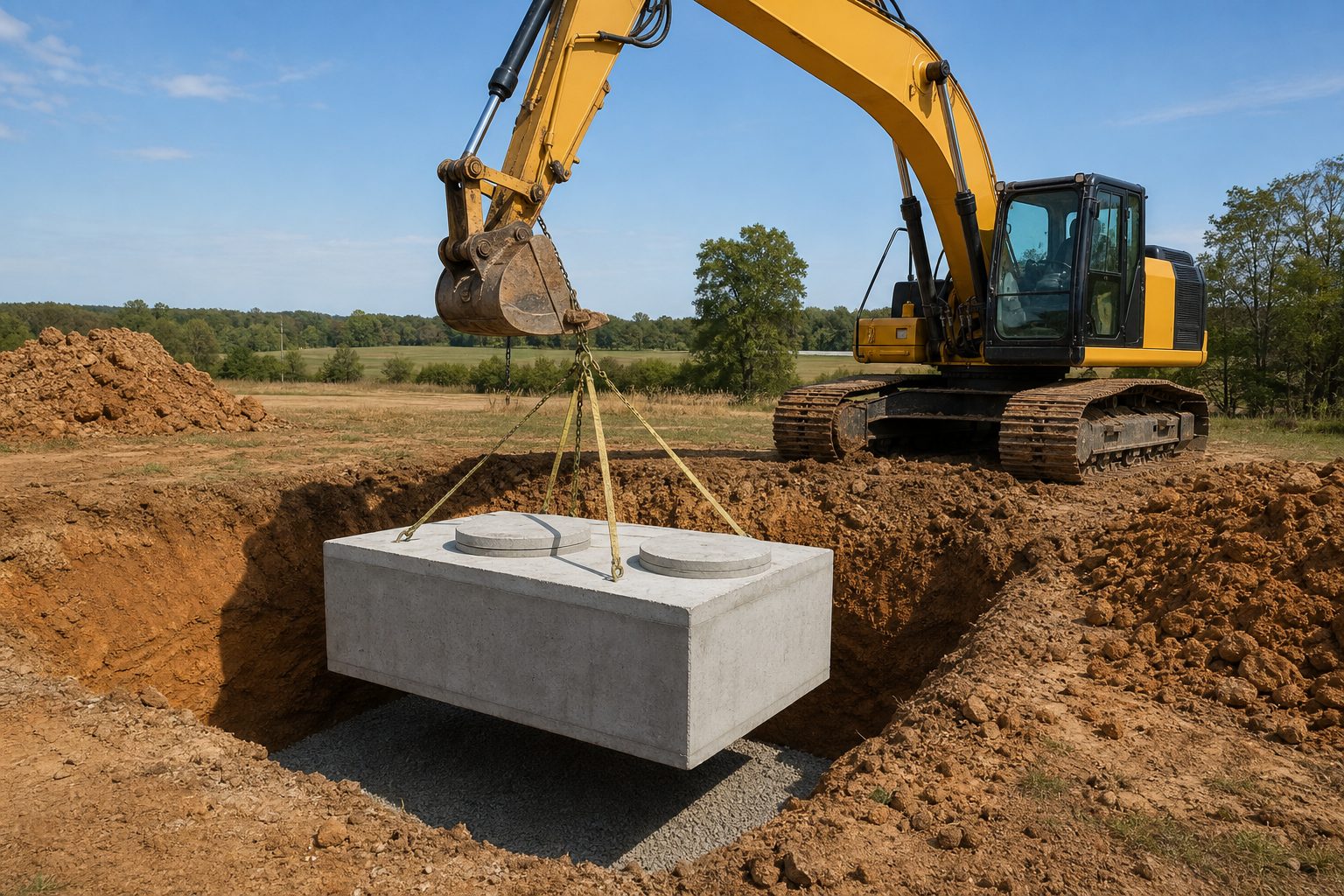
Replacing a failed system usually costs more than installing one on a clean lot, because someone has to deal with what is already there. The old tank has to be pumped, crushed or removed, the failed field may need to be abandoned properly, and the new field has to go somewhere that has not already been loaded with effluent for twenty years. On a tight lot, finding that area is sometimes the hardest part of the job.
What a Quote Should Include
A quote worth comparing should clearly state:
- The system type and size being proposed, and the design flow it is based on
- Tank size and material
- The absorption area design and its dimensions
- Whether permits and permit fees are included
- Whether soil evaluation and design work are included
- What restoration is included at the end: backfill, grading, seeding
- What is explicitly excluded
If one quote is dramatically cheaper than the others, look at that list before you celebrate. The gap is usually in what has been left out, and the most common omissions are permits, soil work and site restoration.
Warning Signs in a Cheap Quote
Be cautious about a quote given over the phone without anyone visiting the site, a quote that does not name a system type, a contractor who wants to skip the permit process, or a price that excludes restoration so the yard is left as raw dirt. Any of these usually means the number will grow once work starts.
Financing and Getting a Real Number
A septic system is rarely a planned expense, particularly when an existing one fails. We offer financing for that reason, and we would rather help someone plan the work than watch them defer a failing system until it becomes an emergency.
We respond to quote requests within about two hours and can usually get to the site within the week. Request a free quote and we will look at your lot and give you a detailed written number, with the assumptions spelled out. We serve Loudon, Roane, Knox, Anderson, Morgan, Monroe, Blount, McMinn, Meigs and Sevier counties.