The permit is the part of a septic project homeowners understand least and worry about most. It is also the part we handle for our customers, because a stalled permit stalls everything behind it: the excavation, the foundation, the closing date.
Here is how septic approval actually works in Tennessee, in plain terms.
You Need a Construction Permit Before Anything Is Installed
In Tennessee, anyone who wants a subsurface sewage disposal system installed, or who needs to repair a failing one, must obtain a Septic System Construction Permit. The permitting authority for most of the state is the Tennessee Department of Environment and Conservation's Division of Water Resources, working through its Environmental Field Offices.
One important local detail: several counties are what the state calls contract counties, where a separate local permit may also be required of installers. That list includes Knox, Blount and Sevier counties, all of which are in our service area, along with Davidson, Hamilton, Jefferson, Madison, Shelby and Williamson. It is one more reason to use a contractor who works in your county regularly.
Soil Evaluation, Not a Perc Test
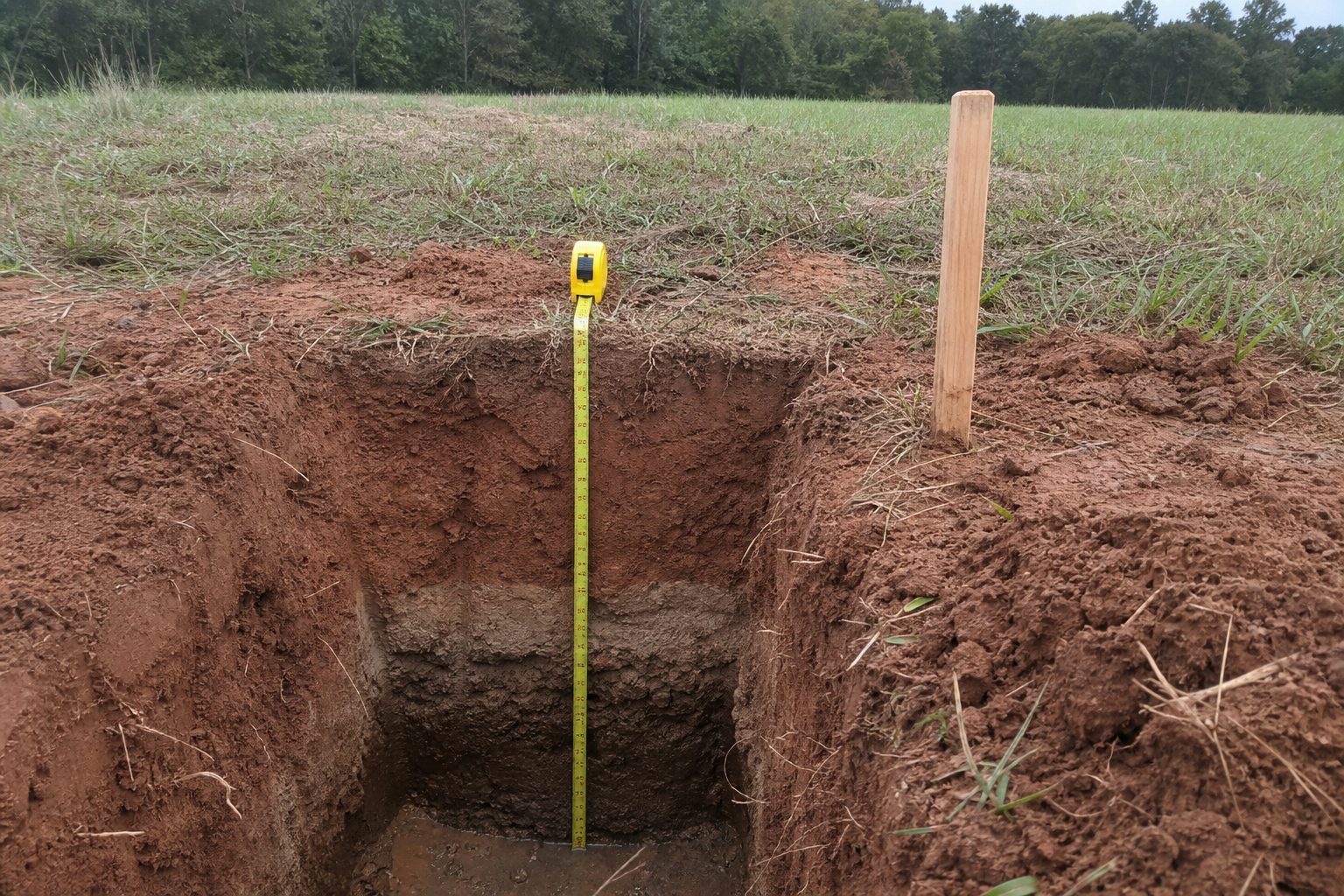
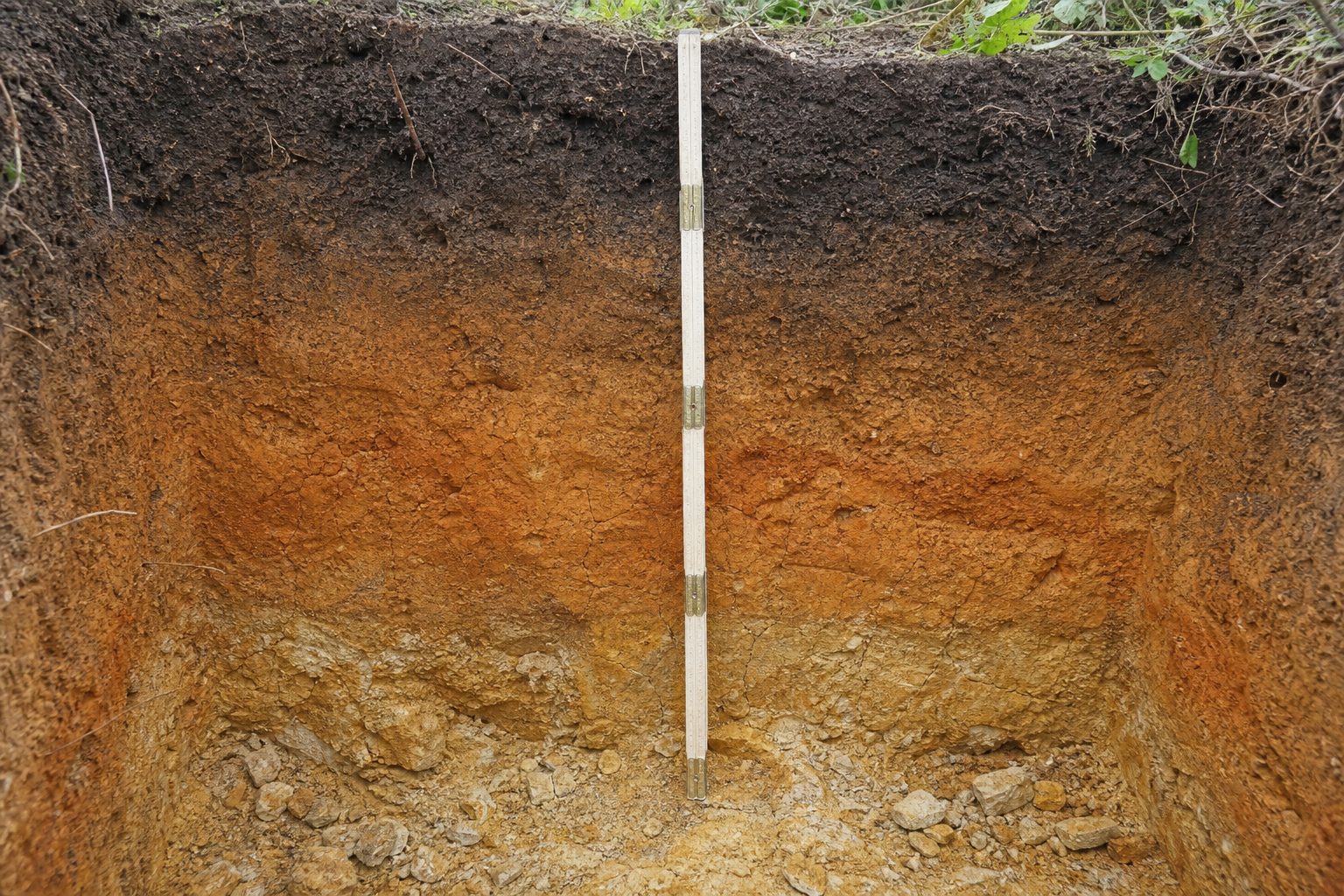
Homeowners often ask us to "run a perc test." In Tennessee, the evaluation that matters is a soil evaluation: someone examines the soil profile on the lot to determine its texture, depth, drainage characteristics and any restrictive layers such as rock or a seasonal water table. That evaluation is what determines whether the site can support a system, what type of system it can support, and how large the absorption area has to be.
Where the state requires it, soil maps must be prepared by a soil scientist, and larger conventional or alternative systems require a design by a licensed engineer. On a straightforward residential lot, the process is much simpler than that sounds. On a difficult site, having the right people involved early is what prevents a denial.
What the Application Asks For
The application itself is not mysterious. Tennessee asks for information including:
- Landowner name and address, and the location and size of the lot
- Number of occupants and number of bedrooms
- Expected water use
- Whether the house has an excavated basement, and whether there are basement plumbing fixtures
- Whether the house and lot are staked
- The name of the installer, if known
- A sketch showing property lines, the house site, any well or spring, the planned driveway and utilities, plus directions to the site
- Soil maps by a soil scientist where required, and engineered design for large conventional or alternative systems
Two items on that list cause most of the delays we see. The first is staking: if the house and lot are not staked, the reviewer cannot evaluate where the system will go relative to the structure. The second is bedroom count, because it sets the design flow and therefore the size of the system. Changing the house plan later can mean revisiting the permit.
How Long Approval Takes
The state's own guidance is that review of a septic system construction permit application generally takes about 10 days, and must be completed within 45 days of the date the application was submitted. Applications can be submitted through Tennessee's online portal, which the Division recommends for faster processing, though paper applications are still accepted at the appropriate Environmental Field Office.
In practice, the calendar risk is rarely the state's review clock. It is the time spent gathering what the application needs, and the time lost when an application goes in incomplete and has to be corrected. That is the part a good contractor manages for you.
What It Costs
Permit and inspection fees are set by rule and are the same regardless of who does your work:
- New conventional or large diameter graveless pipe system: $400 permit, for design flow up to 1,000 gallons per day, plus $100 for the construction inspection
- New alternative system: $500 permit, for design flow up to 1,000 gallons per day, plus $200 for the construction inspection
- Repair: no permit fee, with a $100 repair construction inspection fee
Higher design flows carry additional per-1,000-gallon charges. If a contractor's quote does not mention permit fees at all, ask whether they are included or whether you will be paying them separately.
Then Comes Inspection
The permit authorizes construction; it does not end the process. The installation is inspected before it is covered, which means the work has to match the permitted design. This is exactly why "we can just put it in and sort the paperwork later" is such a bad idea. An unpermitted or non-conforming system is a problem that surfaces at the worst possible moment, usually when the property is being sold.
Buying Land? Ask These Questions First
If you are purchasing a lot that will need a septic system:
- Has a soil evaluation ever been done on this lot, and can you see it?
- Is there a permit on file, and for what size system?
- How many bedrooms would the site support?
- Is there room for both the initial system and a reserve area?
- Where are the well, springs and property lines relative to the proposed field?
The answers change what the land is worth to you. They are much cheaper to obtain before closing than after.
We Handle the Whole Process
Permit assistance is part of what we do: soil testing, application, and tracking it through to approval, so your project does not stall waiting on paperwork nobody is chasing.
Contact Clear Flow Services and we will tell you what your site needs and take the permitting off your plate. We serve Loudon, Roane, Knox, Anderson, Morgan, Monroe, Blount, McMinn, Meigs and Sevier counties.